This First Look presents findings from the Integrated Postsecondary Education Data System (IPEDS) spring 2008 data collection, which included four components: Enrollment in Postsecondary Institutions, Fall 2007; Graduation Rates, 2001 & 2004 Cohorts; and Financial Statistics, Fiscal Year 2007. These data were collected through the IPEDS web-based data collection system. Findings include:
In fall 2007, Title IV institutions in the United States enrolled a total of 18.7 million graduate and undergraduate students; 62 percent were enrolled in 4-year institutions, 36 percent were enrolled in 2-year institutions, and 2 percent were enrolled in less-than-2-year institutions.
Approximately 57 percent of full-time, first-time bachelor's or equivalent degree-seekers attending 4-year institutions completed a bachelor's or equivalent degree at the institution where they began their studies within 6 years.
During 2006-07 academic year, 73 percent of the 2.8 million full-time, first-time degree/certificate-seeking undergraduates attending Title IV institutions located in the United States received financial aid.
To view, download and print the report as a PDF file, please visit:
http://nces.ed.gov/pubsearch/pubsinfo.asp?pubid=2009155
Tuesday, March 10, 2009

WWC assessment of "I Can Learn Pre-Algebra and Algebra" programs
Will wonders never cease! It's SO rare that any research studies ever meet WWC evidence standards that there usually isn't much to report. Here is what they say about these programs:
"One study of I CAN Learn®Pre-Algebra and Algebra meets What Works Clearinghouse (WWC) evidence standards and four studies meet WWC evidence standards with reservations. The five studies included 16,519 eighth-grade students from middle schools in California, Florida, Georgia, and Louisiana.3
Based on these five studies, the WWC considers the extent of evidence for I CAN Learn®Pre-Algebra and Algebra to be medium to large for math achievement."
Links to the full evaluation report are here:
Wednesday, March 4, 2009
How Professors Think -- inside the peer review process
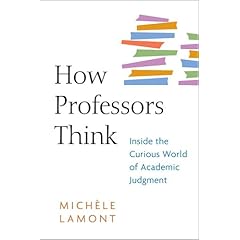
Inside Higher Ed (March 4) had a lengthy review of a new book by Michèle Lamont, called How Professors Think: Inside the Curious World of Academic Judgment. She sat in on considerations of grant and fellowship applications for such organizations as the American Council of Learned Societies, the Social Science Research Council, and the Woodrow Wilson National Fellowship Foundation.
Some (hopefully) tantalizing excerpts from the interview/review:
- "The peer review processes she studied involved grants to professors and graduate students, and all the panels involved professors from many disciplines. She writes that, as a result, the findings may suggest similar issues for multi-disciplinary committees on individual campuses -- panels that frequently play a key role in tenure reviews once a candidate has been considered at the departmental level. "
- "One of the key findings was that professors in different disciplines take very different approaches to decision making. The gap between humanities and social sciences scholars is as large as anything C.P. Snow saw between the humanities and the hard sciences."
- "The most common flaw she documents is a pattern of professors applying very personal interests to evaluating the work before them. “People define what is exciting as what speaks to their own personal interest, and their own research,” she said. "
I'll put the book on order...
Wednesday, February 25, 2009
Advancing Excellent Teaching in American Schools -- free videos
I just found out about this source for free teaching videos. Here is the information the Annenberg Foundation provides: "Annenberg Media uses media and telecommunications to advance excellent teaching in American schools. This mandate is carried out chiefly by the funding and broad distribution of educational video programs with coordinated Web and print materials for the professional development of K-12 teachers. It is part of The Annenberg Foundation and advances the Foundation's goal of encouraging the development of more effective ways to share ideas and knowledge.
My professional listserv also offered this information: "We've discovered that these are best viewed in Internet Explorer. Closed Captions are available. One-time individual registration (free) is required. " Hope you find this useful...let me know!
Annenberg Media's multimedia resources help teachers increase their expertise in their fields and assist them in improving their teaching methods. Many programs are also intended for students in the classroom and viewers at home. All Annenberg Media videos exemplify excellent teaching.
Annenberg Media resources can be accessed for FREE at Learner.org, or can be purchased through the Web site or by calling 1-800-LEARNER."
My professional listserv also offered this information: "We've discovered that these are best viewed in Internet Explorer. Closed Captions are available. One-time individual registration (free) is required. " Hope you find this useful...let me know!
Pre-elementary Special Education study released
The National Center for Special Education Research within the Institute of Education Sciences has released the third major report from the Pre-Elementary Education Longitudinal Study (PEELS) entitled, "The Early School Transitions and the Social Behavior of Children with Disabilities: Selected Findings from the Pre-Elementary Education Longitudinal Study." PEELS involves a nationally representative sample of children, ages 3 to 5 years at entrance to the study, with diverse disabilities who are receiving preschool special education services in a variety of settings. Topics covered in the report include changes in services and eligibility at times of transition, transitions into kindergarten, and social skills and problem behavior of young children with disabilities from 2003-04 to 2005-06.
Tuesday, February 24, 2009
Research compares 1st grade math curricula
The National Center for Education Evaluation and Regional Assistance within the Institute of Education Sciences today released a report on the effectiveness of four math curricula. The "Achievement Effects of Four Early Elementary School Math Curricula: Findings from First Graders in 39 Schools" reports on the relative impacts of four math curricula on first-grade mathematics achievement. The curricula were selected to represent diverse approaches to teaching elementary school math in the United States. The four curricula are Investigations in Number, Data, and Space; Math Expressions; Saxon Math; and Scott Foresman-Addison Wesley Mathematics. First-grade math achievement was significantly higher in schools randomly assigned to Math Expressions or Saxon Math than in those schools assigned to Investigations in Number, Data, and Space or to Scott Foresman-Addison Wesley Mathematics. This study is being conducted as part of the National Assessment of Title I.
To view, download and print the report as a PDF file, please visit:
http://ies.ed.gov/ncee/pubs/20094052/index.asp
To view, download and print the report as a PDF file, please visit:
http://ies.ed.gov/ncee/pubs/20094052/index.asp
Monday, February 16, 2009
Measuring Up 2008: National and State report cards on higher education
The National Center for Public Policy and Higher Education has issued it fifth set of report cards on higher education for the nation (with international comparisons) and the individual states. In spite of some improvements, other nations are advancing more quickly than the United States in preparing students for and providing access to higher education. Nevada, in spite of improvements, is still performing abysmally.
Subscribe to:
Posts (Atom)

 Posts
Posts


